Mordecai Manuel Noah
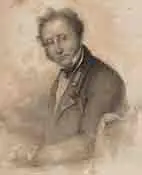
(1785 - 1851)
Mordecai
Manuel Noah was born with America in the city of our nation's
birth, Philadelphia, on July 19, 1785, halfway in time between the
signing of the Treaty of Paris in 1783 and the adoption of the
Constitution in 1787. in his person, Noah mirrored the new
nation-willful, brash, adventurous, creative, combative, yet
good-natured and generous. Similarly, his personal life reflected the
Jewish community to which he belonged, patriotic and philanthropic,
reverential of the religious tradition, respectful and supportive of
its institutions yet growing ever more lax in religious observance,
and desirous of changes in ritual and liturgy.
Mordecai was the first-born son of Manuel Noah, an
immigrant from Mannheim, Germany, who had served in the Revolutionary
War, and Zipporah Phillips, daughter of Jonas Phillips and Rebecca
Machado, whose father had served as hazzan of the Shearith Israel
Congregation of New York. Though three of his grandparents were Ashkenazi,
Noah stressed his Sefardi identity, for it gave him deeper roots in America and a more
aristocratic status in the Jewish community. His association with the
rapidly increasing Ashkenazi community grew closer through his marriage into one of that community's leading families and through his
leadership, in the 1840s, of the Hebrew Benevolent Society, the
united charity organization of a Jewish community now overwhelmingly
Ashkenazi.
To Mordecai M. Noah, journalism and politics were
one career. Journalism he practiced in the service of his political
pursuits: political activity he was involved in to reinforce his
journalistic enterprises. In the early Republic press and party were
in symbiotic relationship. His consulship to the Kingdom of Tunis,
his positions as sheriff of New York, surveyor of its port, and judge
in its court of General Sessions, and his editorship of half a dozen
newspapers were for him all of a piece-a career of public service. In
the Jewish community, Noah served as its chief orator, delivering the
major addresses at its important communal gatherings. As an accepted
interpreter of Judaism to the
general community, he informed his audience in newspaper articles and
from the lecture platform about various aspects of Jewish religion
and history, about Jewish concerns and aspirations. To Americans he
was the representative Jew; to Jews, he was the quintessential
American; Noah gained from both roles.
Noah believed that American and Jewish ideals and
interests were congruent and that in his political endeavors his
Jewishness was more an advantage than a handicap. From the time he
petitioned for a consulship in 1811 to the time when he sent a letter
to New York's Governor Seward in 1849, Noah relied on his Jewish
identity to gain him political advantage, reminding the secretary of
state and the governor that the Jewish community would appreciate and
reward any favors shown to him, as a member and leader of the
community. And as the Jewish community increased in numbers and
affluence, so too did Noah's political influence and power. He fully
believed that, because he was a Jew, his appointment to a
governmental position of trust would be a powerful statement to the
world both about the status of Jews in America and the nature of
American democracy. As he wrote to Secretary of State James Monroe in
1811, his appointment to a consulship would "prove to foreign
powers that our government is not regulated in the appointment of
their officers by religious distinction." in a world darkened by
bigotry, America was for him a beacon of freedom and equality, but
his faith was soon tested.
His appointment as consul to the Barbary
States terminated, Noah returns to America to plead his case,
which he puts forth in this 128-page Correspondence and
Documents Relative to the Attempt to Negotiate for the Release of
the American Captives at Algiers. Its last paragraph is
worthy of note:
The institutions of the United States are the property of the
nation. The faith of the people is pledged to their existence.
The most distinguished feature in our compact ... is religious
liberty-is the emancipation of the soul from temporal
authority-we cease to be free, when we cease to be liberal.
Mordecai M. Noah, Correspondence and Documents....
Washington, 1816. Rare Book and Special Collections Division.
 |
Noah was appointed Consul to the Kingdom of Tunis,
and in his Travels in England, France, Spain and the Barbary
States in the Years 1813-14 and 15, New York, 1819, we read of
his brief but eventful tenure. In it Noah explains the termination of
his tenure by Secretary Monroe in the secretary of state's own words:
At the time of your appointment, as Consul to
Tunis, it was not known that the religion which you profess would
form an obstacle to the exercise of your Consular functions.
Noah cried "Outrage!" as did others,
Jews and gentiles alike. In his Correspondence and Documents .
. . , Washington, 1816, Noah complains not so much about the
treatment he received, but about the injury to the young nation's
freedoms:
My dismissal from office in consequence of
religion, has become a document on file in the department of State.
This may hereafter produce the most injurious effects establishing
a principle, which will go to annihilate the most sacred rights of
the citizen.
|
This portrait of Mordecai Manuel Noah
appears as the frontispiece of a work
describing his brief but eventful tenure
as Consul to the Kingdom of Tunis.
Mordecai
M. Noah, Travels
in England, France, Spain, and the Barbary
States, in the Years 1813-14 and 15. New York: Kirk and Mercein, 1819. Rare Book and
Special Collections Division |
The Library's holdings also contain the
correspondence between Madison and Noah two years later concerning
his dismissal. On May 6, 1818, accompanying the Consecration
Address, Noah sent a letter to Madison which deserves a wider
readership than the few scholars who may seek it out in the
Manuscript Division.
Dear Sir,
I take the liberty to enclose to you a Discourse
delivered at the consecration of the Jewish Synagogue in this city,
under the fullest persuasion, that it cannot but be gratifying to
you to perceive this portion of your fellow Citizens enjoying an
equality of privileges in this country and affording a proof to the
world that they fully merit the rights they possess. I ought not to
conceal from you that it afforded me sincere pleasure, to have the
opportunity of saying, that to your efforts, and those of your
illustrious colleagues in the Convention, the Jews in the United
States owe many of the blessings which they now enjoy, and the
benefit of this liberal and first example, has been felt very
generally abroad and has created a sincere attachment toward this
Country, on the part of foreign Jews.
I regret that I have not had the pleasure of
seeing you since my return from the Mediterranean. It arose from a
belief that my recall was the result of very unfavorable
impressions made on your mind; if these impressions have existed, I
do sincerely hope that they have been removed by subsequent
explanations, for I wish you to be assured, and I have no object in
view in making the assertion, that no infamy arose in Barbary to
the public service from my religion as relating to myself, on the
contrary, my influence and standing abroad was highly creditable
and flattering.
I could wish, not only for the sake of my
coreligionaires, but for that of your administration, that if my
letter of recall cannot be erased from the Books of the Department
of State, that such explanations may be subjoined as may prevent
any arising from the precedent;-for as my accounts are adjusted,
and a balance struck in my favor, the objections in that letter,
refers solely to my religion, an objection, that I am persuaded you
cannot feel, nor authorize others to feel.

Newspaper editor, playwright, diplomat,
orator, and leader in the Jewish community, Mordecai M. Noah sent
this letter on matters personal and civic to James Madison, with
a copy of his address at the consecration of Shearith Israel's
new synagogue building in New York. Madison's reply and those of
Adams and Jefferson were published by Noah in his Travels in
England, France, Spain and the Barbary States (New York,
1819). The first page of Noah's letter reads in part:
I ought not to conceal from you that it afforded me sincere
pleasure, to have the opportunity of saying, that to your
efforts, and those of your illustrious colleagues in the
Convention, the Jews in the United States owe many of the
blessings which they now enjoy, and the benefit of this liberal
and first example, has been felt very generally abroad and has
created a sincere attachment toward this Country, on the part of
foreign Jews.
Mordecai M. Noah to James Madison, May 6, 1818. Manuscript
Division, Papers of James Madison.
 |
We can now better understand the second part of
the previously cited letter from Madison to Noah as a response to the
above:
As your foreign mission took place whilst I was
in the administration it cannot be but agreeable to me to learn,
that your accounts have been closed in a manner favorable to you.
And I know too well the justice and candor of the present executive
[Monroe] to doubt that an official preservation, will be readily
allowed to explanations necessary to protect your character against
the effect of any impressions whenever ascertained to be erroneous.
It was certain, that your religious profession was well-known at
the time you received your commission, and that in itself it could
not be a motive in your recall.
Noah made peace with Monroe, for in the Monroe
Papers we find a twenty-page letter from Noah, dated June 23, 1823,
urging Monroe's support for William Crawford as candidate for the
presidency. Crawford's bid failed, and with it Noah's political and
editorial influence waned, but it gave Noah time to pursue a plan he
had proposed some five years earlier, the establishment of a Jewish
settlement on Grand Island on the Niagara River.
First
page of a long political letter marked "Confidential" from Mordecai M. Noah to James Monroe,
on "matters of deep importance to the safety and prosperity
of the country, and at the same time, of no less consequence to
your tranquility, and to that fame and influence to which you are
entitled, and which should await your retirement." He
asks Monroe's support for the candidacy of
William Crawford for the presidency, a bid
which failed.
Mordecai M. Noah to James Monroe, June 23, 1823. Manuscript
Division, Papers of James Monroe.
 |
As an American and as a Jew, Noah was constantly
looking for points where American and Jewish interests might
intersect. In the early decades of the nineteenth century, America's
greatest need was for immigrants. In his travels in Europe and
Africa, Noah learned that Jews in the Old World desperately needed a
haven for themselves and their children. To bring such Jews to a
welcoming America would be a signal service to both.
The drama Noah staged in Buffalo on September 15,
1825, in dedicating Ararat as "A City of Refuge for the
Jews," with men marching, band playing, and "Judge"
Noah in regal vestments orating, was for both America and world
Jewry. The pageant, the proclamation, and Noah's speech were intended
to grab the attention of newspaper editors to whom description and
text were sent. Accounts of the Ararat drama appeared in newspapers
throughout the United States and in England, France, and Germany as
well. The drama presented the Jews as the most desirable citizens a
nation could want-able, ambitious, productive, and loyal; to the Jews
of the Old World, it portrayed what kind of country America was for
the Jews. Political dignitaries, leaders of society, and the general
populace joined to celebrate the establishment of a city for Jews,
while America's most prominent Jew proclaimed a Jewish state on
American soil and welcomed his brethren to settle it.
One of the newspapers which published a full
account of the proceedings was the National Intelligencer,
Washington, D.C. In its September 29, 1825, issue it described the
ceremonies attendant upon the laying of the cornerstone, with its
Hebrew quotation and English inscription (the stone survives and is
now in a museum on Grand Island) and Noah's address.
Mordecai
M. Noah was not alone in identifying
the American Indians as descendants
of the Ten Lost Tribes of Israel.
The belief was widespread in early
nineteenth-century America, a new nation
steeped in the biblical heritage,
seeking roots in antiquity. Noah
took the opportunity in this address
to assert his Jewish restorationist
sentiments, predicting that "Syria
[i.e., Palestine] will revert to the Jewish
people."
Mordecai M. Noah, Discourse on the Evidence of the American
Indians Being the Descendants of the Lost Tribes of Israel,
New York, 1837. General Collection.
 |
Noah linked American and Jewish interests in two
discourses published eight years apart. His Discourse on the
Evidence of the American Indians Being the Descendants of the Lost
Tribes of Israel, New York, 1837, gives a hallowed antiquity to
America-biblical origin to its first settlers. To Jews living in an
America of rapidly growing nativist sentiments, it provided earlier
antecedents than any descendants of the earliest European settlers
could claim. Noah restates Jewish nationalist aspirations first
sounded in his Consecration address of 1818, where he said:
Never were the prospects for the restoration of
the Jewish nation to their ancient rights and dominion more
brilliant than they are at present ... They will march in
triumphant numbers ... and take their rank among the governments of
the earth.
Now in 1837, he calls for action:
The Jewish people must now do something for
themselves ... Syria [i.e., Palestine] will revert to the Jewish
nation by purchase ... Under the co-operation and protection of
England and France, this reoccupation of Syria ... is at once
reasonable and practicable.
Seven years later, the return to Zion became
Noah's subject in a Discourse on the Restoration of the Jews,
delivered twice in 1844 and published a year later. The role formerly
allotted to England and France is now given to America. "I
confidently believe in the restoration of the Jews ... and believing
that political events are daily assuming a shape which may finally
lead to that great advent, I consider it my duty to call upon the
free people of this country to aid us in any efforts which, in our
present position, it may be prudent to adopt." He emphasizes the
special affinity between America and Jewish national aspirations:
Where can we plead the cause of independence for
the children of Israel with greater confidence than in the cradle
of liberty? ... Here we can unfurl the standard, and seventeen
millions of people will say, "God is with you; we are with
you; in his name and in the name of civil and religious liberty, go
forth and repossess the land of your fathers. We have advocated the
independence of the South American republics ... we have combated
for the independence of Greece ... if these nations were entitled
to our sympathies, how much more powerful and irrepressible are the
claims of that beloved people, before whom the Almighty ... swore
they should be his people, and he would be their God; who for their
protection and final restoration, dispersed them among the nations
of the earth, without confounding them with any! ...
The liberty and independence of the Jewish nation
may grow out of a single effort which this country may make in their
behalf ... they want only protection, and the work will be
accomplished.
In Noah's proposals we find classic Zionist
assertions of future generations:
The Jews are in a most favorable position to
repossess ... the promised land, and organize a free and liberal
government ...
Every attempt to colonize Jews in other
countries has failed ...
The first step is to solicit from the Sultan of
Turkey permission for the Jews to purchase and hold land . . .
Those who desire to reside in the Holy Land and
have not the means, may be aided by ... societies to reach their
haven of repose ...
Ports of the Mediterranean [will be] occupied by
enterprising Jews. The valley of the Jordan will be filled by
agriculturists from ... Germany, Poland and Russia.
Noah wrote these words a half-century before Theodor
Herzl wrote Der
Judenstaat, and more than a century before the establishment
of the State of Israel in 1948.
Noah, the Jew, proclaimed his faith that the
Jews will return to and rebuild their ancient homeland; Noah, the
enterprising American, calls upon the American nation to take
leadership in this endeavor, which will fulfill ancient promises
and modem needs. In this proto-Zionist classic, Noah proposes a
program which became a political movement a half-century later
with the convening of the First Zionist Congress, and a reality a
century later with the founding of the State of Israel.
Mordecai M. Noah, Discourse on the Restoration of the Jews,
New York, 1845. Rare Book and Special Collections Division.
 |
Newspapers Noah edited, patriotic plays he wrote,
addresses he gave are preserved in the Library. Surely the most
curious-and rarest-of Noachian items is a large illustrated folio
broadside reading:
Mordecai M. Noah ... duly sworn, deposeth and
saith, that on the 20th day of June 1828 ... he was most violently
assaulted, by Elijah J. Roberts, who attacked him on the steps, and
cow-skinned HIM!!
Roberts was a former business associate with whom
Noah had a falling out.
Elijah
J. Roberts, a former business associate,
is accused by Mordecai M. Noah of having "attacked him on the steps." A
close examination of the depiction of
the attack on the upper right-hand corner
of this broadside leaves one puzzled.
The steps are of the Park Theater, whose
playbill reads:
THE JEW
I act of the HYPOCRITE
End with the farce of
THE LIAR
At the top of the steps, the purported
victim, Noah, pronounced aquiline nose and large in body, has
just dropped his formidable walking stick. His accused attacker
looks half his size, his weapon, a small and thin walking stick.
The entire depiction, especially the theater announcement, seems
far more anti-Noah than critical of Roberts.
Rare Book and Special Collections Division.
 |
More indicative of Noah is his obituary in the Boston
Weekly Museum, where the entire front page of the April 26, 1851,
issue is devoted to an account of his life and works and a two-column
signed portrait of the deceased.
The Boston Museum gave the entire
front page of its April 26, 1851, issue to an obituary of
Mordecai M. Noah, his bibliography, accomplishments, and
contributions, and a two-column portrait.
Boston Museum, April 26, 1851. General Collection.
 |
In his determined insistence on being part of
America's political, social, and cultural life while at the same time
participating in Jewish religious and communal life, Mordecai Manuel
Noah demonstrated by example that in America a Jew could be both
fully Jewish and fully American. As the first to do so publicly,
dramatically, and successfully, Noah might well be called "The
first American Jew."
Sources: Abraham J. Karp, From
the Ends of the Earth: Judaic Treasures of the Library of Congress,
(DC: Library of
Congress, 1991). Noah portrait and travel
book appear in the
Library's
From
Haven to Home exhibit.
|
