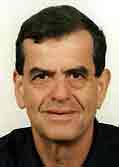
Aaron Ciechanover

(1947 - )


Dr. Aaron Ciechanover was born in 1947, in Haifa, Israel. Ciechanover is Professor at the Unit of Biochemistry and Director of the Rappaport Family Institute for Research in Medical Sciences at the Technion (Israel Institute of Technology) in Haifa. He became a Professor at the Technion in 1992, and was an Associate Professor there from 1987 to 1992.

Ciechanover holds Ph. D. and M. D. degrees. He studied medicine at the Hebrew University Medical School in Jerusalem, receiving an M. D. degree in 1974. In 1974-77, Ciechanover served in the Israel Defense Forces. In 1977-81, Ciechanover was a graduate student with Avram Hershko at the Technion. Ciechanover received a Ph. D. degree in 1981. In 1982-84, Ciechanover was a postdoctoral fellow at the Department of Biology, MIT, where he studied lasialoglycoprotein and transferrin receptors in the laboratory of Harvey Lodish, and also collaborated with Varsharsky and his student Finley in their studies of ts85 mouse cells.

Ciechanover's independent work began in 1986, at the Unit of Biochemistry, Technion, Israel.

Ciechanover shared the 2004 Nobel Prize in Chemistry with Irwin Rose and Avram Hershko for “for the discovery of ubiquitin-mediated protein degradation.” The following press release from the Royal Swedish Academy of Sciences describes Ciechanover's work:

Proteins build up all living things: plants, animals and therefore us humans. In the past few decades biochemistry has come a long way towards explaining how the cell produces all its various proteins. But as to the breaking down of proteins, not so many researchers were interested. Aaron Ciechanover, Avram Hershko and Irwin Rose went against the stream and at the beginning of the 1980s discovered one of the cell's most important cyclical processes, regulated protein degradation. For this, they are being rewarded with this year's Nobel Prize in Chemistry.

Aaron Ciechanover, Avram Hershko and Irwin Rose have brought us to realise that the cell functions as a highly-efficient checking station where proteins are built up and broken down at a furious rate. The degradation is not indiscriminate but takes place through a process that is controlled in detail so that the proteins to be broken down at any given moment are given a molecular label, a ‘kiss of death', to be dramatic. The labelled proteins are then fed into the cells' "waste disposers", the so called proteasomes, where they are chopped into small pieces and destroyed.

The label consists of a molecule called ubiquitin. This fastens to the protein to be destroyed, accompanies it to the proteasome where it is recognised as the key in a lock, and signals that a protein is on the way for disassembly. Shortly before the protein is squeezed into the proteasome, its ubiquitin label is disconnected for re-use.

Thanks to the work of the three Laureates it is now possible to understand at molecular level how the cell controls a number of central processes by breaking down certain proteins and not others. Examples of processes governed by ubiquitin-mediated protein degradation are cell division, DNA repair, quality control of newly-produced proteins, and important parts of the immune defence. When the degradation does not work correctly, we fall ill. Cervical cancer and cystic fibrosis are two examples. Knowledge of ubiquitin-mediated protein degradation offers an opportunity to develop drugs against these diseases and others.

Honors & Awards:

1996-present: Member, Council of the European Molecular Biology Organization
1997: Henry Taub Prize (Technion, Israel) for Excellence in Research
1999: Wachter Prize, by the University of Innsbruck, Austria (with A. Hershko)
2004: Nobel Prize in Chemistry

Most relevant publications:

Ciechanover, A., Hod, Y., and Hershko, A. (1978) A heat-stable polypeptide component of an ATP-dependent proteolytic system from reticulocytes. Biochem. Biophys. Res. Commun. 81, 1100-1105.

Hershko, A., Ciechanover, A., Heller, H., Haas, A. L., and Rose, I. A. (1980) Proposed role of ATP in protein breakdown: conjugation of proteins with multiple chains of the polypeptide of ATP - dependent proteolysis. Proc. Natl. Acad. Sci. USA 77, 1783-1786.

Ciechanover, A., Elias, S., Heller, H. and Hershko, A. (1982) Covalent affinity purification of I ubiquitin-activating enzyme. J. Biol. Chem. 257, 2537-2542.

Hershko, A., Heller, H., Elias, S. and Ciechanover, A. (1983) Components of ubiquitin-protein ligase system: resolution, affinity purification, and role in protein breakdown. J. Biol. Chem. 258, 8206-8214.

Finley, D., Ciechanover, A. and Varshavsky, A. (1984) Thermolability of ubiquitin-activating enzyme from the mammalian cell cycle mutant ts85. Cell 37, 43-55.

Ciechanover, A., Finley, D. and Varshavsky, A. (1984) Ubiquitin dependence of selective protein degradation demonstrated in the mammalian cell cycle mutant ts85. Cell 37, 57-66.

Ferber, S. and Ciechanover, A. (1987) Role of Arginine-tRNA in Protein Degradation by the Ubiquitin Pathway. Nature 326,808-811. ,

Ciechanover, A., Ferber, S., Ganoth, D., Elias, S., Hershko, A. and Arfin, S. (1988) Purification and characterization of arginyl-tRNA-protein transferase from rabbit reticulocytes: its involvement in modification and ubiquitin-dependent degradation of proteins bearing acidic N-termini. J. Biol. Chem. 263, 11155-11167.


Sources: Albert and Mary Lasker Foundation, NobelPrize.org