Fact Sheets: Egyptian Presidential Elections
(Updated June 2012)
In May 2012, Egypt held its first presidential election since the January 2011 revolution that ousted President Hosni Mubarak.
Out of the 13 candidates (another 10 candidates were disqualified before the election), none received more than 50% of the total vote. Therefore a run-off election was scheduled for June 2012 between the top two vote getters - the Muslim Brotherhood's "Freedom & Justice Party" candidate Mohamed Morsi (24.8%) and former Prime Minister Ahmed Shafiq (23.7%).
On June 24, Egypt's interim military rulers announced Morsi as the run-off winner and new Egyptian President, having won 51.7% of the votes. His ascension to the position marks the first time in Egyptian history that the president comes from outside the military and also marks the first time in history than an Islamist candidate will become head-of-state for an Arab country.
| Election Winner | Runner Up | ||
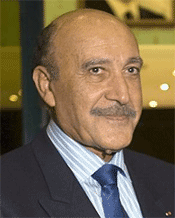
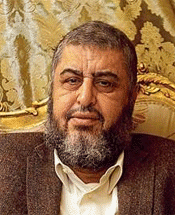
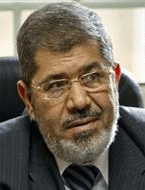 | Mohamed MorsiElected as chairman of the Muslim Brotherhood's "Freedom and Justice" Party in April 2011, Morsi emerged as the Brotherhood's back-up candidate for the elections after their first choice, Khairat El-Shater, was disqualified because of a prior criminal conviction. |  | Ahmed ShafikFormer fighter pilot in the Egyptian Air Force, Shafik was appointed by Mubarak as prime minister during the Revolution, though he only remained in post from January to March 2011. Initially disqualified from election, he appealed the ruling and was reinstated. |




Download our mobile app for on-the-go access to the Jewish Virtual Library