Karl Emil Franz Fiebinger
(1913 - ?)
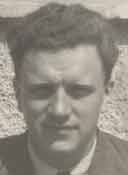
Born in Vienna, Austria, January 20, 1913, Fiebinger attended the Technische.Hochschule Wien (Vienna College for Advanced Technology) where he received an engineering degree specializing in underground engineering, cable car lines, railway and tunnel construction, statics, mechanics, geodesy, and hydrography.[1] Before the Anschluss, he was an assistant to Prof. Sallinger in the Technische.Hochschule Wien, working as a skilled structural engineer and expert in steel-reinforced concrete. In April 1939, Fiebinger opened the “Buero fur Bauwesen, Dipl. Engineer Karl Fiebinger,” in Vienna, an office for industrial construction employing from 30 to 40 highly qualified civil engineers who specialised in transport and sewage.[2]
Prior to the Anschluss, according to Fiebinger, he was a member of the Vaterländische Front,[3] which was however the only political party legal in Austria after 1933. After the Nazi takeover in 1938, he applied for membership in the NSDAP but was not accepted. [4] He was, however, admitted into the NS-Bund Deutscher Technik (NSBDT-Nazi Engineering Association) in 1939 and the NSD Dozentenbund (Nazi Lecturers’ Society) in 1941.[5] The U.S. War Department, in a 1948 recommendation of Fiebinger, reports that he was forced to join the “SS Construction” in December 1944 “in order to perform consulting engineering for Hitler.”[6]
In fact, Fiebinger wanted to be known for his direct supervision of the construction of underground tunnel systems. According to post-war interrogation reports, Fiebinger claims that he was recognized both as a designer and “supervisor of construction”[7] for the underground tunnel systems at Ebensee,[8] St. Georgen and der Gusen (Bergkristall),[9] Melk[10], and Redl-Zipf[11]. These claims were also confirmed by his colleagues.[12] His assistant, Dr. Dipl. Engineer Hermann Verrette explained in a post-war recommendation of Fiebinger to the U.S. War Department:
Fiebinger’s engineering office has perhaps been the only one which from the first sketch till the last and perfect plan, carried out not only the architectural construction of the edifices but also the light, water-, and gas-supply and the railroad tracts. When in the course of the war, in consequence of the air attacks, the most important industries were subterraneous installed, Fiebinger did not only design these plants of which no prototype were as yet existing, but he also charged himself with the direction of these constructions, which direction, in a time of direct want of material and workers, demanded a particular energy and particular organizational abilities.[13]
Fiebinger himself, in a recommendation for his assistant, Dipl. Ing. Wilhelm Hasslinger, claimes that “Besides the biggest surface plants in Germany, five large underground plants have been constructed and completely finished under assistance of this engineer.”[14]
After the war, Fiebinger was arrested as a security threat on March 6, 1946, because he allegedly “supervised important SS building matters, including a V-2 factory and a crematory for a concentration camp both at Ebensee.” (Fiebinger never stated an association with the crematory.) A year later, on April 29, 1947, the United States Forces in Austria recommended he be released and placed in “Town Arrest” in Salzburg, Austria, where his movements were restricted and he was kept under surveillance.[15]
Fiebinger’s expertise was sought by the U.S. Army Engineering Corps,[16] and by November 5, 1947, plans were made to ship him to the Engineer Research and Development Lab in Fort Belvoir, Virginia as part of Project Paperclip,[17] the program to find and exploit German scientists and engineers. By December 29, 1947, he was under contract to the War Department.[18] Although a Notification of Personnel Action form dated May 12, 1948, indicates he was still in Austria.
Fiebinger eventually resided in New York City[20] and worked as a consultant for Guy B. Panero, a Corps of Engineers contractor, until November 18, 1948. [21]Fiebinger held at least two contracts with the War Department, numbered W49-129-eng-130 and W49-129-eng-59.[22] In a letter dated September 22, 1948, Merrit W. Mathews, Assistant Engineer in the Intelligence Division of Military Operations acknowledged Fiebinger had provided “data concerning underground installations in Austria and Germanyby interrogation. The data provided has been incorporated in the final report on foreign underground installations.”[23]
Mathews further recommended Fiebinger to other agencies, noting the engineer’s experience constructing underground factories at “Schlier, Ebensee, St. Gerogen [sic] a/d Gusen, and Melk.”[24]
Although Fiebinger resided in the United States and continued as a consultant for the War Department for several years,[25] according to Austrian historians Freund and Perz, after assisting the U.S. in constructing underground launch pads for intercontinental nuclear ballistic missiles, Fiebinger participated in lucrative building projects in Mexico in the 1960s and 1970s, which were partly financed by Austrian foreign aid credits.[26]
Fiebinger currently resides in Vienna, Austria.
Jan-Ruth Mills for the KZ Gusen Memorial Committee which would like to thank Dr. Larry McDonald at the National Archives for his indispensable assistance.
[1] Landshut_Housing_Project_Information_Requested_by_Engr._Corp.PDF
[2] Florian Freund, and Bertrand Perz, Das KZ in der Serbenhalle: Zur Kriegsindustrie in Wiener Neustadt. Industrie, Zwangsarbeit und Konzentrationslager in Österreich. Vol. 1. (Vienna: Verlag für Gesellschaftskritik, 1987), 43; Landshut_Housing_Project_Information_Requested_by_Engr._Corp.PDF; May_7_1947_Interrogation_Report_USA_Description_of_Undergrou.PDF
[3] May_7_1947_British_ Interrogation_Report_RG_319_270.84.2.7_E.PDF; May_7_1947_Interrogation_Report_USA_Description_of_Undergrou.PDF Ibid.
[4] Ibid and May_12_1948_Personnel_Action_RG_319_270.84.2.7_Entry_134b_IR.PDF
[5] Landshut_Housing_Project_Information_Requested_by_Engr._Corp.PDF; May_7_1947_Interrogation_Report_USA_Description_of_Undergrou.PDF
[6] September_22_1948_Recommendation_from_War_Department_RG_319_PDF
[7] Ibid
[8] http://www.jewishvirtuallibrary.org/jsource/Holocaust/ebensee.html
[9] http://gusen.org/gu20101x.htm
[10] http://www.jewishvirtuallibrary.org/jsource/Holocaust/melk.html
[11] http://www.jewishvirtuallibrary.org/jsource/Holocaust/mauthsubcamps.html
[12] Ibid
[13] December_1_1947_Recommend_F._as_direct_manager_of_constructi.PDF
[14] January_7_1948_Recommendation_of_Hasslinger_RG_319_270.84.2.PDF
[15] March_6_1946_April_29_1947_Arrest_and_Release_RG_319_270.84.PDF
[16] Landshut_Housing_Project_Information_Requested_by_Engr._Corp.PDF
[17] November_5_1947_PaperClip_Cable_Orders_to_Ft._Belvoir_Virgin.PDF
[18] September_22_1948_Recommendation_from_War_Department_RG_319_.PDF
[19] May_12_1948_Personnel_Action_RG_319_270.84.2.7_Entry_134b_IR.PDF
[20] June_18_1948_War_Dept._Notice_Fiebingers_Arrival_RG_319_270.PDF
[21] November_18_1948_Request_Release_from_Pantero_July_15_1948_T.PDF
[22] January_13_and_14_1949_Contract_and_Release_RG_319_270.84.2.PDF, November_18_1948_Request_Release_from_Pantero_July_15_1948_T.PDF
[23] September_22_1948_Recommendation_from_War_Department_RG_319_.PDF
[24] Ibid
[25] January_13_and_14_1949_Contract_and_Release_RG_319_270.84.2..PDF
[26] Florian Freund, and Bertrand Perz, Das KZ in der Serbenhalle: Zur Kriegsindustrie in Wiener Neustadt. Industrie, Zwangsarbeit und Konzentrationslager in Österreich. Vol. 1. (Vienna: Verlag für Gesellschaftskritik, 1987), 43

Download our mobile app for on-the-go access to the Jewish Virtual Library