Binational Science Foundation (BSF)
The United States-Israel Binational Science Foundation (BSF) is a grant-awarding institution that promotes research cooperation between scientists from the United States and Israel. BSF was established by the American and Israeli governments in 1972 by then Israeli Ambassador Yitzhak Rabin and U.S. Assistant Secretary of State Joseph Sisco. Its income is derived from interest on an endowment that the two governments contributed to equally. In 1984 the endowment was replenished, and from that time on it has not been enlarged, despite high cumulative inflation in both countries. Presently, the endowment produces an interest of about $16 million annually. Starting in 2012, the Israeli government has pledged an additional $3 million supplement per year for the BSF, provided matching support is given by the United States. The BSF acted to create joint funding programs with the U.S. National Science Foundation (NSF). Scientists from both countries submit together scientific research proposals to the NSF, and if selected, the BSF uses this added Israeli government money to support the Israelis, while the support of the NSF to the U.S. scientists consists the U.S. matching contribution.
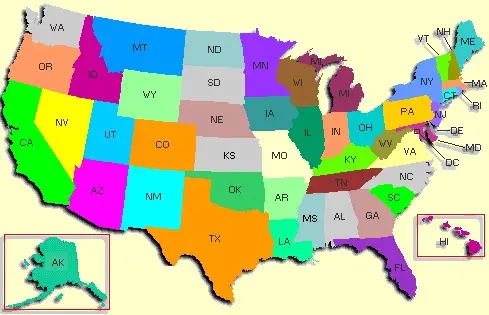
How has BSF benefited your state?
CLICK HERE to find out!
|
Since its inception, and in today’s value, BSF has awarded over $600 million to more than 5000 research projects involving many thousands of scientists from more than 400 U.S. institutions located in 46 states, Puerto Rico and the District of Columbia. Many of these projects have led to important scientific, medical and technological breakthroughs with wide-ranging practical applications.
BSF has documented so many new discoveries made possible by its research grants and counts 43 Nobel Prize laureates among its grantees.
Shimon Peres, former President of Israel, noted, "The support of the United States-Israel Binational Science Foundation will prepare the next generation of U.S. and Israeli scientists for a leadership role in our global community."
Most of the projects that BSF funds are in basic research; however, grants are also given to applied and technological research in Life Sciences, Natural Sciences, Social Sciences and Exact Sciences. Proposals are submitted by individual scientists through their institutions, and are evaluated on the basis of their scientific merit, as well as the degree of cooperation between the researchers. Grant requests can be made for a period of up to four years.
Proposals are evaluated by a peer review process. Assistance in the review and evaluation of proposals is rendered by science advisers. Ad hock science advisers are recruited from among senior research scientists in Israel and the U.S. Each of them is assigned a group of proposals in his or her field of specialization with the charge to select suitable referees from around the world. Final recommendations for grant awards are made by the 36 science advisers' panels in the various areas of research. Based on the available resources, the Board of Governors of the BSF, consisting of an equal number of Israelis and Americans, decides how many grants will be given each year and what would be the average grant size.
BSF-sponsored studies are highly successful in achieving their two main goals: strengthening the U.S.-Israel partnership through science, and promoting world-class scientific research for the benefit of the two countries and all mankind. The BSF grants help extend research resources to achieve milestones that might not otherwise be attainable, as well as introduce novel approaches and techniques. For the American scientists, the grants lead the researchers in new directions; confirm, clarify and intensify research projects; and provide unmatched access to Israeli knowhow and research results that help speed American scientific advances. For Israeli scientists, the BSF opens the door to the world scientific leader, and provides access to facilities and knowhow that are not available locally. Israel being a small country with limited resources makes this service that the BSF provides to the Israeli science community of tremendous value, which is reflected in the very large number of applications it receives.
As of 2001/02, pursuant to the Board of Governors resolution, submission of grant applications is on a split-program basis, namely: the eligibility to submit applications is limited, in alternate years, to either health sciences, life sciences and psychology or to exact, natural and social sciences. Prior to that, applications were accepted every year in all areas of research supported by the BSF. This change became necessary due to lack of sufficient funds, in view of the fact that the BSF endowment was last replenished in 1984.
In 2012 and 2013, together consisting of a full cycle of all areas of research, some 830 applications were submitted to the BSF. Out of those, some 240 were approved for support.
In 2010, US Senator Kirsten Gillibrand (D-NY), a member of the Senate Foreign Relations Committee, voiced her strong opinion that U.S. support of the BSF and the two other binational funds between the US and Israel (one in agriculture and one in industrial research and development) be kept and strengthened. As she told her Senate colleagues, "US-Israel collaboration and the work of foundations such as... BSF, have had a lasting and fundamental impact on our countries' economics and relationship."
BDS
In 2013 the Boycott-Divestment-Sanction (BDS) movement gained a lot of headway and popularity in the United States, with major groups such as the Association for Asian American Studies, the Native American Indigenous Studies Association, and the American Studies Association backing an academic boycott of Israeli universities. World renowned physicist Stephen Hawking cancelled a trip to an academic conference in Israel in 2013, citing the boycott as the reason for the cancellation. According to the director of the BSF Dr. Yair Rotstein, this academic boycott of the Israeli sciences is "meaningless". He claims that it is just a ploy for media attention, citing the fact that the BSF continually grants an average of $16 million per year in awards to Israeli and American scientists working on joint ventures. A recent partnership between the BSF and the National Science Foundation to support research in biology, chemistry and neuroscience demonstrates that the US-Israel scientific collaborative relationship is growing unnafected by the BDS movement according to Rotstein. Another sign that the BDS movement is not affecting the science sector is the construction of the Cornell University-Technion -Israel Institute of Technology that is currently being build in New York City. Even though Israel may have it's differences with Europe and the United States, Israeli science and technology leads the industry and provides common ground for international cooperation. Officials at America's largest science-based association, the American Association for the Advancement of Science, have stated that they have not been contacted about participating in the academic boycott.
By the Numbers
- The BSF has been active for 43 years.
- Over $600 million has been awarded by the BSF since it's founding, an average of $16 million per year.
- 7,400 scientists, and 375 Israeli and U.S. institutions have received awards and grants from the BSF.
- The BSF has issued over 5,000 grants.
- BSF funded projects have produced 43 Nobel Laureates.
- The top 5 institutions that receive grant funding from the BSF are: the University of California system, the University of Michigan, Stanford University, the National Institutes of Health, and New York University.
- The BSF is most active in New York, New Jersey, California, Massachusetts, and Maryland.
Contact Info
Dr. Yair Rotstein
Executive Director
United StatesIsrael Binational Science Foundation
8 Hamarpeh St.
Har Hotzvim
Jerusalem, Israel 91450
Tel. 972-2-582-8239
Fax. 972-2-582-8306
Email. [email protected]
Carol Effrat
Deputy Director of External Affairs
United StatesIsrael Binational Science Foundation
Tel: 305-588-9277
Email: carol @bsf.org.il
|