Binational Industrial Research &
Development Foundation (BIRD)
What is BIRD?
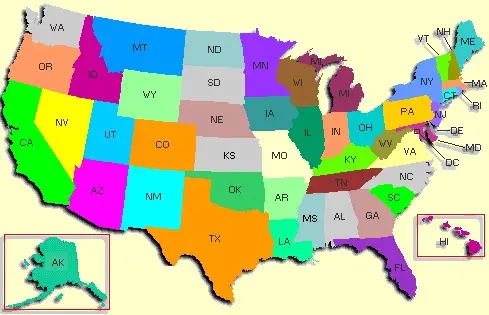
How has BIRD benefitied your state?
CLICK HERE to find out!
|
The Binational Industrial Research and Development
Foundation (BIRD) was established
by the U.S. and Israeli governments
in 1977 to generate mutually beneficial cooperation between the private
sectors of the U.S. and Israeli high tech industries, including start-ups
and established organizations. BIRD provides both matchmaking services
between U.S. and Israeli companies, as well as funding that covers up
to 50 percent of project development and product commercialization costs.
BIRD's scope extends to Communications, Life Sciences, Electronics,
Electro-optics, Software, Homeland Security, Renewable and Alternative
Energy and other sectors of the hi-tech industry.
Since its inception, BIRD has funded more than 800 projects.
BIRD
has teamed with many leading companies in the U.S., for example:
American Red Cross, AOL, Bayer Pharmaceutical,
Eastman Kodak, General Dynamics,
General Electric, IBM and Johnson&Johnson, among many others. In addition, nearly 40 Israeli companies that have had projects sponsored by BIRD are now traded on Wall Street, adding to Israel's surge in the high-tech and industrial fields.
BIRD supports approximately 20 projects annually. The
cumulative sales of products developed through BIRD projects have exceed
$8 billion and BIRD has received nearly $100 million in royalty repayments
from projects. The top five states in which BIRD has funded: 266 projects
in California, 90 in Massachusetts, 88 in New York, 64 in New Jersey
and 26 in both Virginia and Florida.
The BIRD Foundation model that has reached this broad, collaborative economic success in Israel and the United States is now being imitated elsewhere with the hope of spurring growth in other countries. For example, in 2012 the Turkish Economic Policy Research Foundation organized a meeting of the Global Entrepreneurialship Program-Turkey in order to discuss ways of using the BIRD model to foster better economic relations between Ankara and Washington.
Current Areas of Interest
Agrotechnology, Cleantech and Environment, Communications, Electronics, FinTech, Gas, Homeland Security and Cyber Security, Life Sciences, Software, etc.
How Does BIRD
Operate?
Any pair of companies, one Israeli and one U.S.-based, may apply jointly
so long as they can demonstrate the combined capabilities and infrastructure
to define, develop, manufacture, sell and support an innovative product
based on industrial R&D.
The companies may be simply cooperating on an ad hoc basis, linked through
a corporate joint venture, or commonly owned (in whole or in part).
The key criterion is that each corporate entity shall have the ability
to carry out its part of the joint development and commercialization.
Their willingness to share in the financial risk of product development
as well as in the financial gain of commercialization, are also key
factors in BIRD's evaluation.
Typically the role of the larger company is product definition and
specification, sales, and service, while the role of the smaller company
is in product development and some manufacturing. Up to 35 full-scale
projects and 20 mini-projects may be approved each year.
The BIRD Foundation offers conditional grants for joint development
projects on a risk-sharing basis. The Foundation funds up to 50% of
each company's R&D expenses associated with the joint project. Repayments
are due only if commercial revenues are generated as a direct result
of the project. If a project fails, BIRD claims no repayments.
Full–Scale Projects
A Full-Scale Project is defined as one in which the total development
cost to the two companies (up to the point of commercial readiness)
is at least $400,000. BIRD's cost-share is up to 50% of the total cost
of such projects.
Decisions whether to approve or reject proposals for funding full-scale
projects are made by BIRD's Board of Governors. The Board of Governors
convenes semiannually to act on proposals for full-scale projects.
Mini Projects
It is often appropriate for two companies contemplating a partnership to define an initial project of modest size rather than to plunge into a higher-cost, full-scale project of greater risk and duration. BIRD has, therefore, designed and introduced the Mini-Project, which has proven to be a powerful and successful tool for rapid and relatively low-risk involvement of U.S. and Israeli companies in relatively small but meaningful product developments of a cutting edge technology.
The Executive Director is empowered by the Board of Governors to allocate up to 20% of annual conditional grant funds for the support of mini-projects. The budget of a BIRD mini-project is limited to $400,000. Therefore, the grant is a maximum of $200,000, or 50% of actual project costs, whichever is less..
Projects in 2016
For Fiscal Year 2016, the BIRD Foundation Board of Governors approved $7.5 million in funding for nine new projects between Israeli and American companies. In addition to the grants from BIRD, the projects will access private sector funding, boosting the total value of all projects to approximately $21.5 million.
The nine projects approved by the Board of Governors are in addition to the 931 projects which the BIRD Foundation has approved for funding during its 39 year history. To date, BIRD’s total investment in joint projects has been over $330 million, helping to generate direct and indirect sales of more than $10 billion.
The 2016 project approvals are as follows:
- Cellect Biotechnology (Kfar Sava, Israel) and Entegris (Billerica, MA): Improved stem cells selection system.
- Evogene (Rehovot, Israel) and Arcadia Biosciences (Davis, CA): Novel drought tolerant wheat varieties.
- File X (Ness Ziona, Israel) and Brimrose (Sparks, MD): Real-Time AOTF-based hyperspectral imaging system for pollution detection.
- Hinoman (Or Yehuda, Israel) and Benchmark Biolabs (Lincoln, NE): Vaccine for Newcastle virus disease from aquatic plants source.
- Israel Aerospace Industries (Ben Gurion International Airport, Israel) and Honeywell (Morris Plains, NJ): Sense and Avoid for UAVs.
- Kamada (Ness Ziona, Israel) and Baxalta (Bannockburn, IL): Treatment for prevention of lung transplant rejection.
- Keystone Heart (Caesarea Business Park, Israel) and SurModics (Eden Prairie, MN): Novel medical device for cerebral protection during cardiovascular procedures.
- MedAware (Raanana, Israel) and Becton Dickinson (Franklin Lakes, NJ): Prescription Error Surveillance.
- Mellanox (Yokneam, Israel) and Chromis Fiberoptics (Warren, NJ): Polymer Optical Fibers for data centers.
Contact Information
Israel Headquarters Office
Eitan Yudilevich, Ph.D., Executive Director
Kiryat Atidim, Building 4, 15th Floor
Tel Aviv 61581, Israel
Tel: 972-3-698-8302
Fax: 972-3-698-8327
Mobile: 972-52-665-6902
E-Mail: [email protected]
Israel Mailing Address
P.O. Box 58054
Tel Aviv 61580, Israel
U.S. Offices
Michal Miasnik,
West Coast Representative (California)
Tel: 408-727-6777
Fax: 408-727-6166
E-Mail: [email protected]
Andrea Yonah,
East Coast Representative (New Jersey)
Tel: 609-356-0305
E-Mail: [email protected]
Sources: Binational
Industrial Research and Development Foundation
|