Synagogues of the World

Jerusalem


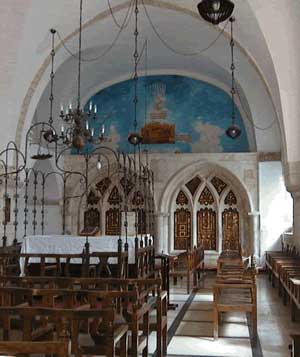
The Rabban Yochanan Ben Zakai synagogue is on Mishmeret Kehuna Street in the Old City. It served as the center of the Sephardic community and, to this day, the Chief Sephardic Rabbi, the Rishon LeZion, ceremoniously assumes his office here. The Ben-Zakai is named after the Second Temple sage Rabban Yochanan Ben Zakai, as legend deems this spot as the location of his Beit Midrash, study hall.


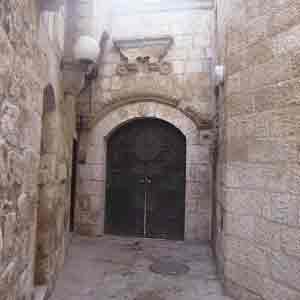
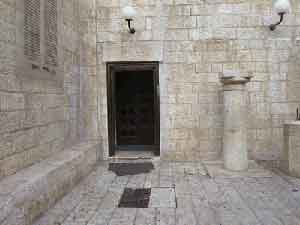
The Eliyahu Hanavi synagogue is named for a surprise visit of the Prophet Elijah. Many years ago the Jewish community in the area had so dwindled that there were no longer 10 men for the completion of a minyan. On Yom Kippur a 10th man mysteriously showed up and completed the quorum. After the fast the visitor entered an adjoining room to complete his prayers and vanished. The community realized that the 10th man was none other than Elijah the Prophet and the synagogue was named after him. The ark was donated by the community of Livorno, Italy after their main synagogue was destroyed during WWII. The entrance to the building is from Beit El street tucked into a little nook beneath the home of Rabbi andMrs.Getz zt"l, the former Rabbi of the Kotel. There is a minyan here every Shabbat and on holidays.

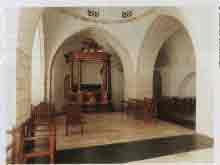
The Middle Synagogue was created in the 18th century as a result of the growth of the Sephardic community which outgrew the premises of the Ben Zakai .It only became known as the Middle Synagogue, its original name was Kahal Zion, when the Istanbuli synagogue was built and sandwiched it between the Ben Zakai. This building is no longer used for services, although it was renovated in 1967. It houses an ark from Piedmont, Italy.


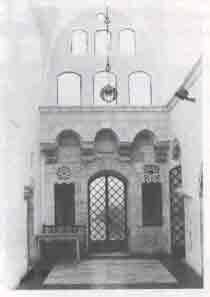
The Istanbul Synagogue was built by immigrants from Istanbul in the 18th century. It houses a 17th century ark from a community in Italy. The bimah was brought over from a synagogue in Pesaro, Italy. The entrance is also through Beit-El street at the juncture with Gal-Ed street. Services are held once a month on the Shabbat of Rosh Chodesh, the new month.

The Menachem Tzion Synaoguge was built in the middle ages. This congregation was one of the first to be reestablished in the community after 1967 when there were still gaping holes from the wars in the front of the entrance. The beautiful eighteenth-century ark was brought from Italy and the furnishing in the men's section came from the synagogue of Rav Samson Raphael Hirsch in Germany. It is located on HaYehudim St. just north of the Hurva, up the staircase to the right of the Menorah coffee shop.

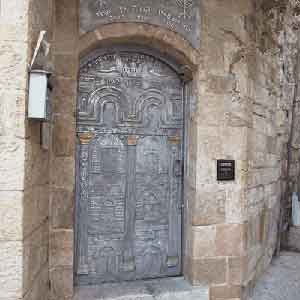
The Beit-El Yeshiva and Synagogue is a centuries-old kabbalist yeshiva. Also known as Kahal Chassidim, it was renewed under the aegis of HaRav Yehuda Mayer Getz z"l, who until his death was the official Rabbi of the Western Wall area. It was originally founded in 1757 during the time that the Hurva had been confiscated from the Jews. The entrance is through the magnificent silver etched door at the beginning of Beit El Street.

The Ramban synagogue was founded ( reconstructed) by Rav Moshe ben Nachman, the Ramban, upon his arrival to Jerusalem in 1267. The building foundation is comprised of Romanesque vaults resting on Roman and Byzantine capitals which, together with the fact that there are no Gothic or Muslim features, suggest that the original building predates the Crusader period. Over the years, the building has been used as a house of prayer, a mosque (when confiscated by a Mufti), a flour mill, and the neighboring minaret served as a police station during the British period. In 1967, the Jews finally regained their right to the property and the synagogue was reopened, exactly 700 years after the Ramban revived the ancient building. It is located at the corner of HaYehudim Street and the main square.

Off the Hurva Square on the east side, past the entrance to the Herodain Quarter, next to Yeshivat HaKotel stands the remains of what was the tallest building in the Jewish Quarter before destroyed by the Jordanians in 1948. The Tiferet Yisrael Synagogue was built by Nissan Bak at the request of Rabbi Yisrael of Rizhin. The dome was donated by Emporer Franz-Josef of Austria. There are pictures displayed in the bottom level of the remains alongside the remains of mikves, however, to keep mischevious children from the neighborhood out, the Jewish Quarter Development Company erected fences around the building.

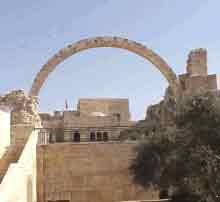
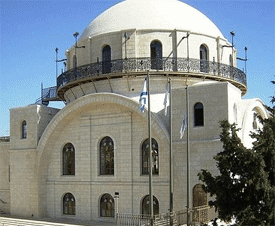
The Hurva Synagogue, also known as Hurvat Rabbi Yehudah HaChassid, was the center of the Old Yishuv. It was destroyed by the Jordanian legion shortly before the fall of the Jewish Quarter in 1948. It's remains can be visited under the great arch, which was built after 1967 to commemorate the synagogue, in the main square of the neighborhood. Entrance from the stairs above the Ramban Synagogue or from HaYehudim St.

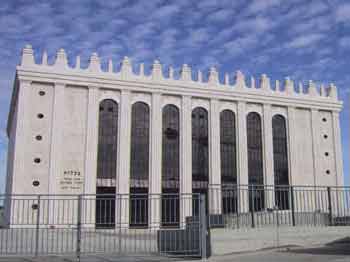
The Belz Synagogue is a Chasidic shul that seats 6,000 in its main sanctuary.


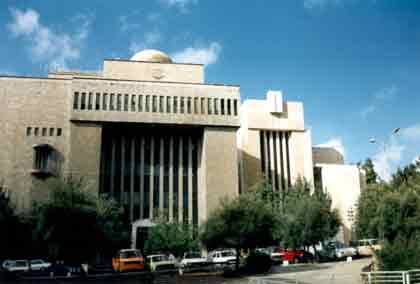
The Great Synagogue


To learn about the history of Jerusalem, click here.


Sources: Jewish Quarter Jerusalem
Belz Synagogue photo courtesy of Jewish Buffalo
Great synagogue photos © Jack Hazut. No reproduction allowed without written permission from Jack Hazut and AICE.